
When Baltimore’s Cylburn Arboretum opened its state-of-the-art Vollmer Visitor and Education Center in 2010, it was a shining example of environmental stewardship. The building featured cutting-edge green technology including composting toilets, a living roof, and geothermal heating and cooling systems. Yet within months, staff discovered a devastating irony: their floor-to-ceiling glass windows, designed to connect visitors with nature, were causing daily bird collisions during migration season that contradicted everything the conservation center stood for.
The problem was severe. During peak migration seasons, between six and ten birds would strike the building’s reflective glass surfaces each day. Birds were dying, being injured, or left stunned from these collisions—an ongoing tragedy that staff witnessed regularly. For an organization dedicated to conservation and environmental education, this contradiction between their mission and their building’s impact created an urgent need for change.
This is the story of how a collaborative effort between AP Corp, Decorative Films, and Baltimore City transformed a bird safety crisis into a conservation success story through the innovative application of bird safety window film—proving that modern architecture and wildlife protection don’t have to be at odds.
Watch the Complete Story
Before diving into the details, see how this bird safety window film transformation unfolded through the eyes of everyone involved—from Cylburn Arboretum staff witnessing daily bird strikes to our installation team applying the solution.
The right bird safety film for windows can align a building’s impact with an organization’s conservation values.
Cylburn Arboretum’s Vision for Environmental Leadership
As Baltimore’s largest public garden spanning 207 acres, Cylburn Arboretum has long stood as a beacon of conservation and natural education. The historic grounds, which transitioned from a private estate to a public arboretum in 1982, serve as a living classroom where visitors learn about native plants, sustainable practices, and environmental stewardship. The Vollmer Center represented the culmination of this mission—a building that would literally embody the green principles Cylburn had taught for decades.
The facility was designed to showcase sustainable architecture at its finest. Its all-glass design wasn’t merely aesthetic; it was meant to blur the boundaries between indoor education spaces and the natural world outside. Visitors could attend workshops while surrounded by views of gardens and woodland, creating an immersive environmental experience.
Yet this architectural vision contained a fatal flaw that wouldn’t become apparent until the building was operational. The very transparency that connected people to nature was creating an invisible barrier that local and migratory birds couldn’t detect until it was too late.
The Hidden Cost of Glass Architecture
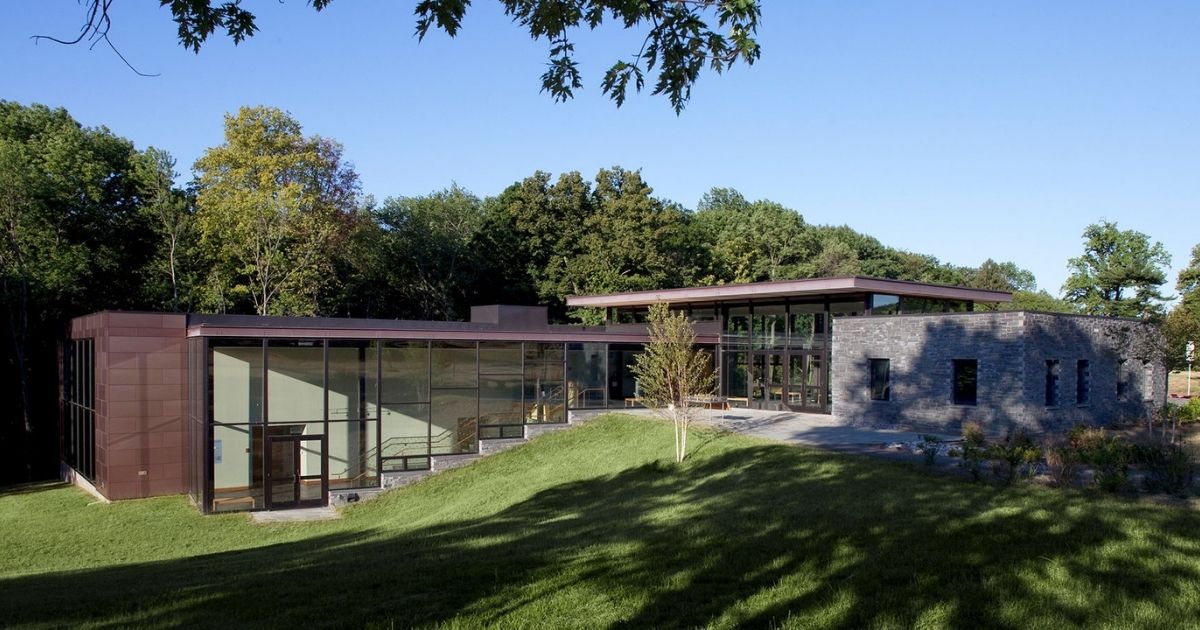
The Vollmer Visitor and Education Center at Cylburn Arboretum, the building that underwent installation of solar bird safety window film to eliminate daily bird strikes while reducing solar heat gain by 75%.
The problem revealed itself with heartbreaking regularity. Staff members documented bird strikes against the building daily. “I’ve noticed, especially during migration season, between six and 10 birds strike the windows a day,” one staff member observed, watching as birds flew directly into what they perceived as a continuation of the forest canopy. While not every strike was fatal, the cumulative toll was staggering—hundreds, if not thousands of birds had died since the building opened. Bird collisions are a widespread issue for glass buildings, but there are proven strategies to prevent birds from flying into windows that can dramatically reduce these incidents.
According to the Cornell Lab of Ornithology, Birds cannot perceive glass as a barrier, instead seeing reflections of habitat or sky that appear to be continuous flight paths. The birds were seeing perfect reflections of their habitat in the windows and flying full-speed into what appeared to be trees and open sky. The building’s environmental features actually worsened the problem: the surrounding native plantings that attracted wildlife also increased bird activity near the glass surfaces. What was meant to be a sanctuary was becoming a hazard.
Beyond the wildlife crisis, the extensive glass created another problem. Solar heat gain through the windows made the interior uncomfortably warm, forcing the building’s systems to work harder and creating an environment that was often too hot for educational programs. Staff members would watch the afternoon sun transform their education center into a greenhouse, undermining both comfort and energy efficiency. (An issue often solved by reflective window film in similar glass-heavy facilities.
For Cylburn’s team, each bird strike represented a fundamental contradiction of their conservation message. How could they teach children about protecting wildlife while birds collided with their windows daily? The building meant to showcase environmental stewardship was failing its most basic test.
Finding the Right Partners for Bird Safety Window Film
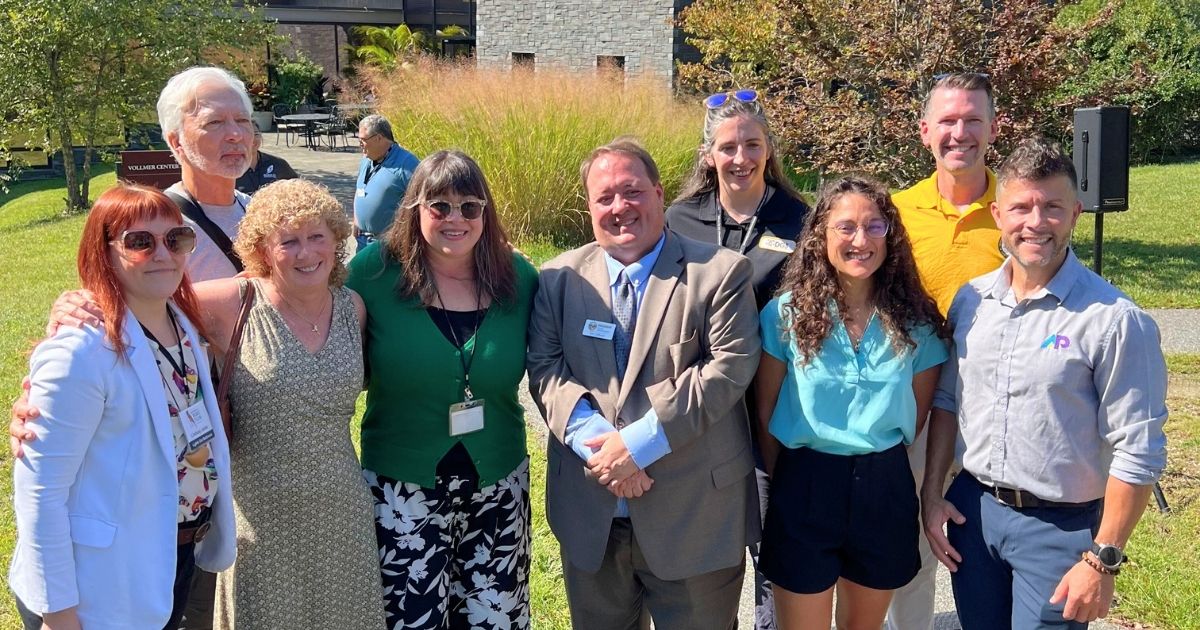
The collaborative team behind the bird safety window film success at Cylburn Arboretum, including representatives from AP Corp, Baltimore City, Decorative Films, and Cylburn staff, celebrating a project that eliminated daily bird strikes while improving building efficiency.
The solution emerged from an unexpected convergence of initiatives. Frank Lee from Baltimore’s Department of General Services had been exploring solar film installations across city buildings as part of a broader energy efficiency program. Meanwhile, Decorative Films had been developing an innovative product that addressed both energy efficiency and bird safety—the BSF-DB35 Solar Bird Safety Film.
When Decorative Films presented this dual-purpose solution, the pieces clicked into place. Here was bird safety film for windows that could solve both problems simultaneously. The product featured a specialized dot pattern visible to birds while maintaining views for humans, combined with solar rejection properties that could significantly reduce heat gain. Notably, Decorative Films demonstrates their commitment to bird conservation by donating 3% of all bird safety film purchases to the American Bird Conservancy’s Glass Collisions Program.
At AP Corp, with our two-decade partnership with Decorative Films and our reputation for meticulous commercial installation work, we were the natural choice to handle the project. Their experience with large-scale window film applications would be crucial for a building with floor-to-ceiling glass surfaces. As one client noted about AP Corp’s work: “Rarely do I ever see a corner that’s not as neat as a pin.”
The collaboration between these partners—Baltimore City providing the vision and funding, Decorative Films supplying the innovative bird safety window film, and AP Corp delivering expert installation—would transform the Vollmer Center from a cautionary tale into a model for sustainable building renovation.
The Installation Strategy for Solar Bird Safety Window Film
The project’s scope was ambitious: every square inch of glass on the Vollmer Center would receive the solar bird safety window film treatment. This comprehensive approach ensured no reflective surfaces remained that could confuse approaching birds. The installation presented unique challenges with floor-to-ceiling windows requiring careful handling and precise application.
AOur team understood that exterior application was non-negotiable for bird safety effectiveness. Birds needed to see the deterrent pattern on the glass surface before impact, not behind it. This meant working with outdoor conditions and ensuring the film could withstand Baltimore’s varied climate.
The BSF-DB35 film’s technical specifications were perfectly suited for this dual challenge. The pattern consisted of quarter-inch dots spaced two inches apart—dimensions specifically calculated to break up reflections while maintaining visibility, following guidelines from organizations like FLAP (Fatal Light Awareness Program). Much like window film distraction markers used in commercial settings to help people recognize glass walls, this patterned design makes the glass visible to birds without obstructing views for building occupants. The film would also reject up to 64% of solar energy and block 99% of harmful UV rays.
We went beyond standard installation procedures, edge-sealing every piece with silicone to lock out moisture and extend the product’s lifespan. This attention to detail ensured the bird safety film for windows would provide long-term protection and performance.
Taking Action to Protect Birds and Improve Comfort
With all stakeholders aligned, the project moved from planning to execution with remarkable efficiency. Baltimore City approved the comprehensive installation, recognizing it as an investment in both wildlife conservation and building performance. The collaborative spirit reflected a shared understanding that protecting birds while improving building efficiency represented a win-win solution.
The installation process became an educational opportunity itself. Cylburn staff engaged with the work, learning about bird safety window film technology and sharing their observations about bird behavior. This knowledge would prove valuable for educating visitors about bird-safe architecture.
Our crew approached each window with meticulous attention, ensuring consistent coverage and quality across the entire building. Throughout the process, the focus remained on achieving both immediate and long-term goals: preventing bird strikes while ensuring the solar bird safety window film would continue protecting wildlife and reducing energy costs for years to come.
Remarkable Results from Bird Safety Film for Windows
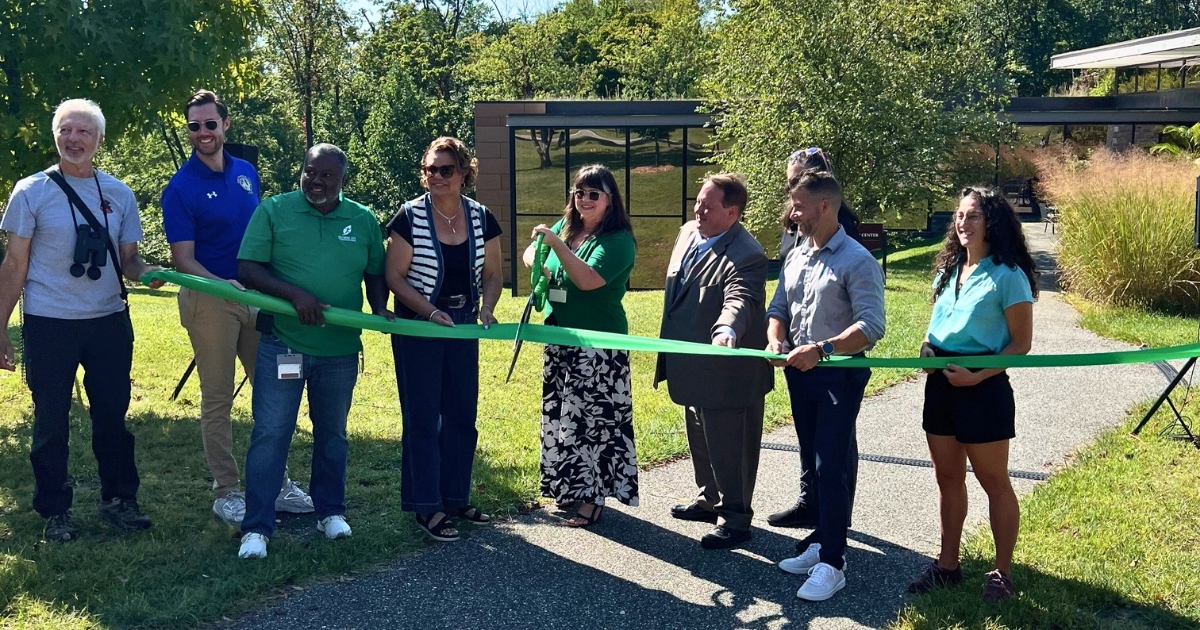
Representatives from AP Corp, Decorative Films, and Baltimore City celebrate the completion of the solar bird safety window film installation at Cylburn Arboretum’s Vollmer Center, marking the end of daily bird strikes and the beginning of a new standard for bird-safe architecture.
The transformation was immediate and dramatic. Where staff once documented multiple daily bird strikes, they now observed birds recognizing the glass as a barrier and adjusting their flight paths. Birds were even observed landing safely on window edges, clearly seeing the glass surface rather than flying through it. “Just knowing all these birds are remaining safe,” one staff member reflected, captures the profound relief felt throughout the organization.
The energy efficiency improvements exceeded expectations. Temperature measurements showed a 75% reduction in heat transfer. “I went downstairs to put my hand next to the shades, and the temperature was a quarter of what it had been,” reported one amazed observer. This decrease in solar heat gain translated directly into improved comfort and reduced strain on the building’s HVAC systems.
The Vollmer Center could now fully embrace its role as an environmental education hub without the troubling reality of bird strikes undermining its message. Even during peak migration periods, collisions have become virtually non-existent. The solar bird safety window film had effectively eliminated what had been a daily concern.
The Consequences of Inaction on Bird Safety
Without intervention, the Vollmer Center would have continued contributing to bird mortality from window collisions. Based on the documented strike patterns, thousands more birds would have been killed or injured over the building’s lifetime—each incident adding to the broader crisis of bird-building collisions that kills up to one billion birds annually in the United States, according to the American Bird Conservancy.
The reputational damage to Cylburn Arboretum would have been severe. How could they maintain credibility as a conservation organization while their showcase building caused daily bird strikes? This was particularly concerning given Baltimore’s active birding community, including organizations like the Baltimore Bird Club that promote local conservation efforts. Energy costs would have continued climbing as well, with excessive solar heat gain forcing mechanical systems to work overtime.
Most importantly, Cylburn would have missed the opportunity to lead by example. By failing to address their bird strike problem, they would have implicitly accepted that bird collisions are an unavoidable cost of modern architecture—a message contrary to everything they stood for.
Setting a New Standard for Green Buildings
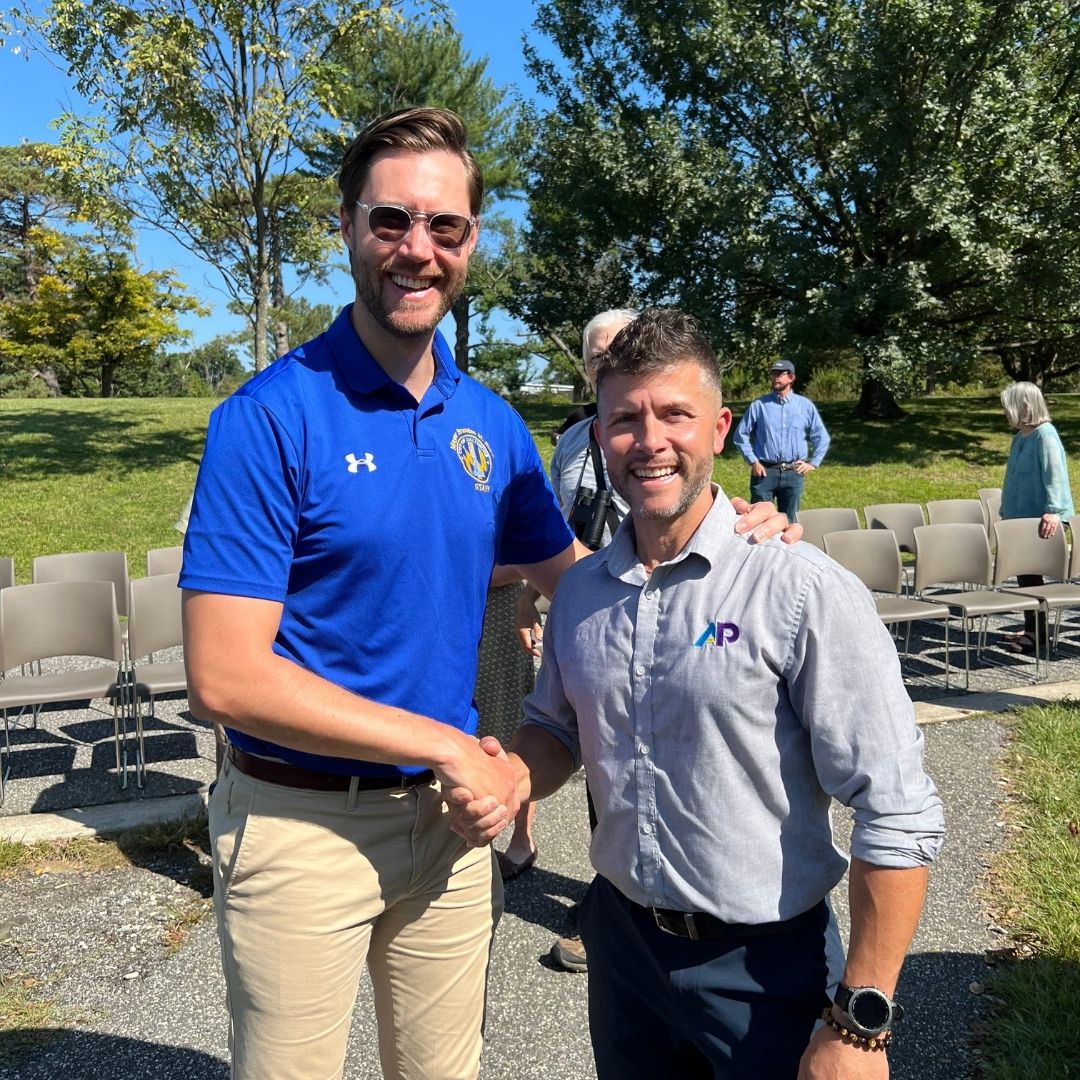
AP Corp CEO Bill Valway and Baltimore Deputy Chief of Staff J.D. Merrill celebrate the successful bird safety window film installation at Cylburn Arboretum.
The Cylburn Arboretum project demonstrates that bird safety window film represents more than just a solution—it’s a new standard for responsible building management. The dual benefits of wildlife protection and energy efficiency make solar bird safety window film a logical choice for any facility with significant glass surfaces. This aligns with emerging green building standards, including the USGBC’s LEED Bird Collision Deterrence Credit, which recognizes the importance of bird-safe design.
This success story influences how other institutions approach similar challenges. When facilities see that bird safety doesn’t require sacrificing views or aesthetics, and that the same solution reduces energy costs, the decision becomes clear. The Vollmer Center now serves as living proof that bird safety film for windows works.
The project highlights the importance of choosing the right partners. Our meticulous installation and Decorative Films’ innovative product were essential, but equally important was Baltimore City’s willingness to invest in a comprehensive solution. This collaboration model offers a template for similar projects nationwide.
For the green building industry, Cylburn’s transformation challenges the assumption that sustainable architecture and bird safety are separate concerns. True sustainability must consider impacts on all living systems, not just energy metrics.
Key Takeaways and Your Path Forward
The transformation at Cylburn Arboretum’s Vollmer Center proves that buildings don’t have to choose between modern design and wildlife protection. Through strategic application of solar bird safety window film, what was once a site of daily bird strikes became a model for conservation-minded architecture. The 75% reduction in solar heat gain improved visitor comfort while reducing energy costs.
This project’s success hinged on three factors: recognizing the problem’s urgency, choosing the right bird safety window film solution, and partnering with experienced professionals. AP Corp’s attention to detail and Decorative Films’ innovative product created a lasting solution that will protect birds for decades.
For facilities facing similar challenges, the path forward is clear. Evaluate your building’s impact on local wildlife. Are birds striking your windows? Is excessive solar heat compromising your energy efficiency? If yes, bird safety film for windows offers a proven solution that addresses both concerns simultaneously.
If you’re considering how to make your building safer for birds while improving energy efficiency, AP Corp can help you explore your options. With decades of experience in professional window film installation, we understand the unique challenges each building presents and can assess whether this solution is right for your facility.